Unit 1: the fundamentality of computation

computational (= cognitive) psychology is about...
Computational psychology is about how the mind works.
- Developmental psychology is about how the mind gets to work the way it does.
- Personality psychology is about how my mind works differently from yours.
- Clinical psychology is about how the mind sometimes works very differently.
- Social psychology is about how multiple minds work together;
also, about how the mind thinks it works (prescientifically).
- Artificial Intelligence is about how machines can be made to
solve some of the problems that minds can also solve.
- Machine Learning is about how machines can learn to
solve some of the problems that minds can also solve.
What problems do minds solve?
What problems do minds confront, naturally?
cognitive psychology is about...
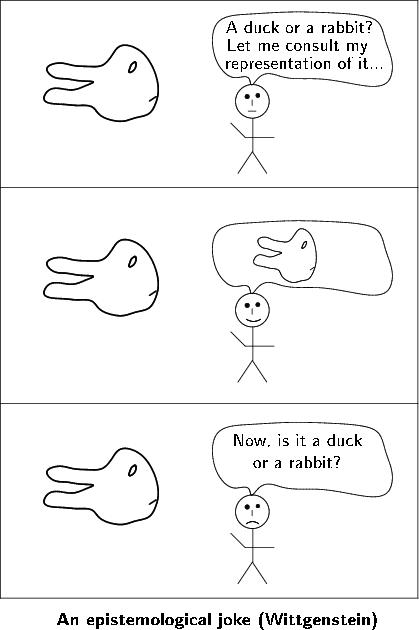
What problems do minds confront, naturally?
- Consider the problems that are the staple of psychology textbooks, such as:
- (under "perception") object recognition, etc.
- (under "memory") storage, retrieval, etc.
- (under "attention") focusing, steering, etc.
Are these problems really the ones that minds confront and solve?
- Consider the explanations typically offered by
psychologists...
converging on a real explanation of how the mind works
- Consider the explanations typically offered by
psychologists —
-
What would a real explanation look like?
-
It would have to be intelligently reductionist, by showing how
complexity arises from simpler interacting elements.
-
It would have to be literal (as opposed to metaphorical) at its core.
The real explanation:
Minds are collections of dynamical, open-ended COMPUTATIONS over
REPRESENTATIONS of the world that brains carry out so as to
maximize the probability of their continuing existence, by
exercising FORETHOUGHT.
is COMPUTATION just a metaphor?
-
the clockwork metaphor: the brain is like...

-
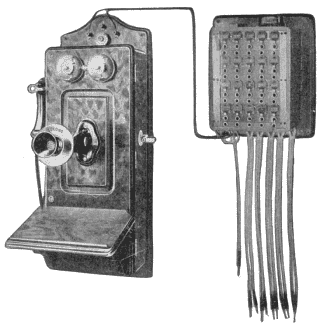
the switchboard metaphor: the brain is like...
-
the computer metaphor: the brain is like...

-
the truth: the brain is like...

COMPUTATION is what brains literally do for a living
-
the clockwork metaphor: the brain is like...
-
the switchboard metaphor: the brain is like...
-
the computer metaphor: the brain is like...
-
the truth: the brain is
like
literally a kind of computer.
computational psychology
Fundamental observation #1:
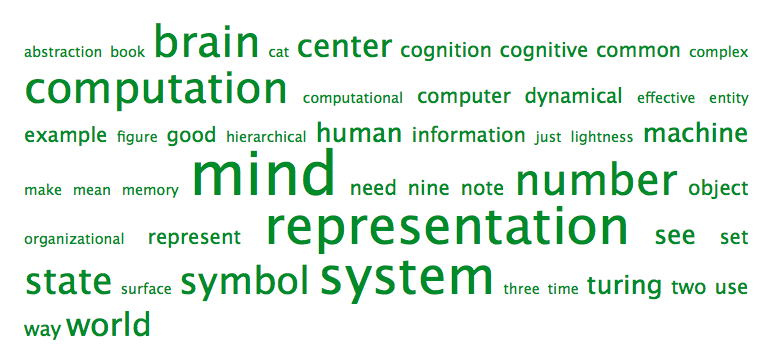
— "cognitive psychology" — a term introduced in 1967 by Ulric Neisser of Cornell as a collective label for
the faculties of the mind such as perception, memory, decision-making, etc. — has turned out to mean
"computational psychology".
computational is special
Fundamental observation #2:
— computational (≈ mathematical) understanding is special
[consider Eugene Wigner's comments on math].
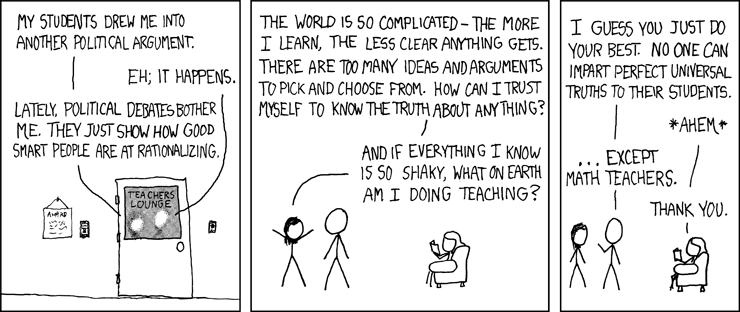
the truth about the brain: it is a kind of computer
How come the brain is a kind of computer?
- [the trivial reason]
Because everything is. [Consider again Wigner's comments.]
the truth about the brain: it is a kind of computer
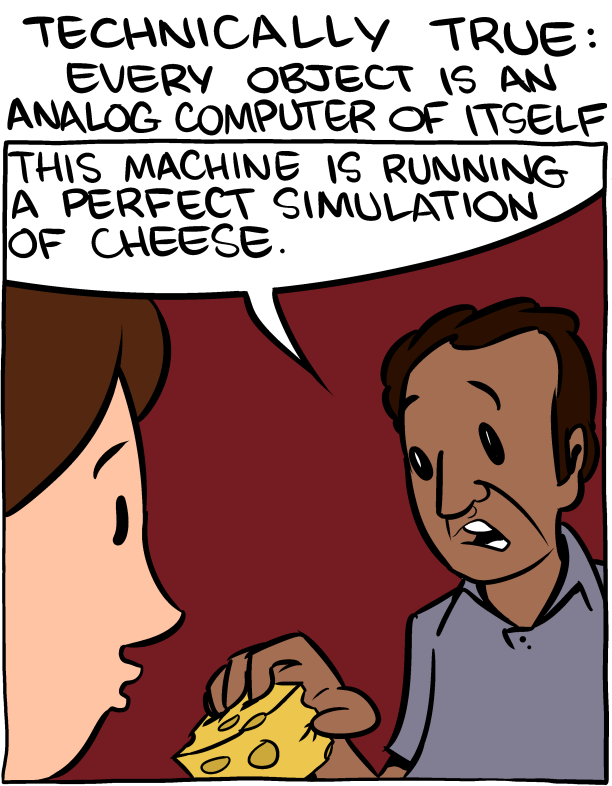
How come the brain is a kind of computer?
- [the trivial reason]
Because everything is. [Consider again Wigner's comments.]
the truth about the brain: it is a kind of computer
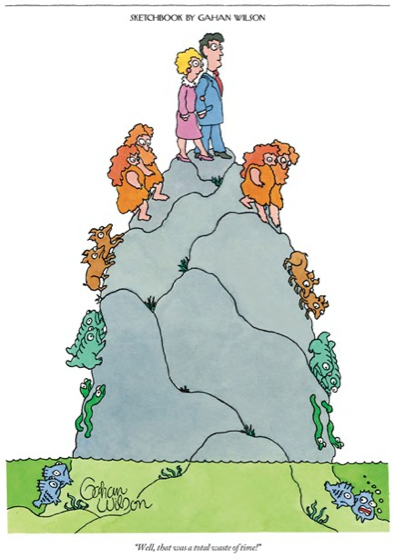
How come the brain is a kind of computer?
- [the trivial reason]
Because everything is. [Consider again Wigner's comments.]
- [the special reason]
Because the computing that the brain carries
out — e.g., in recognizing a conspecific in sensory data — is what justifies its existence. Evolution judges brains by the degree to
which they succeed in computing what they must compute to survive and
procreate.
Compare:
— a piece of chalk computing its trajectory as it falls
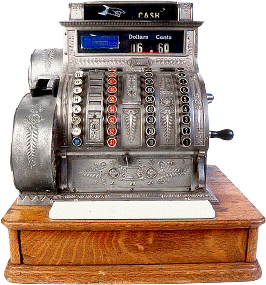
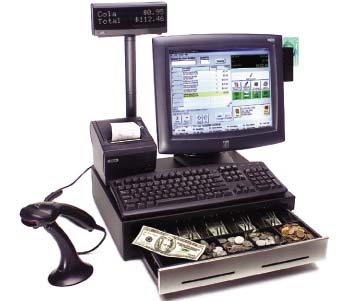
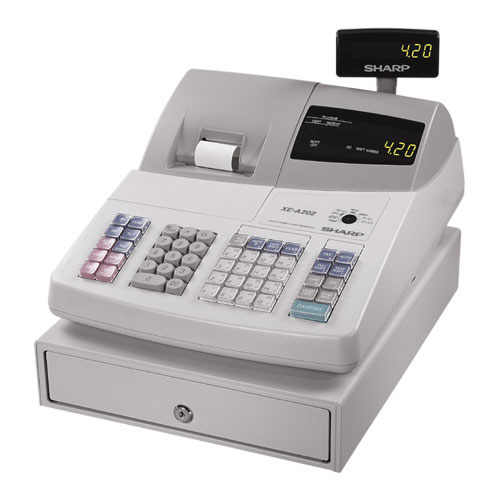
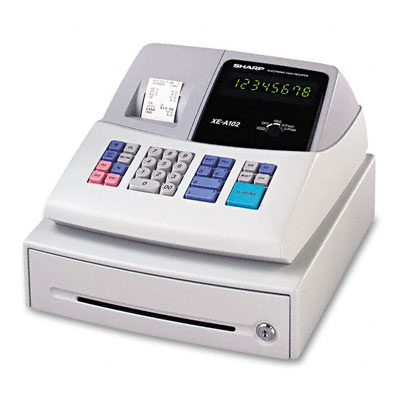
— a cash register
what determines whether or not an object is a cash register?
Selection (natural or artificial) pushes
information-processing systems (natural or artificial) to succeed in
processing information.
what determines whether or not an object is sentient? (= is of interest to psychology)
It cannot be about what it IS MADE OF.
It must be about what it DOES.
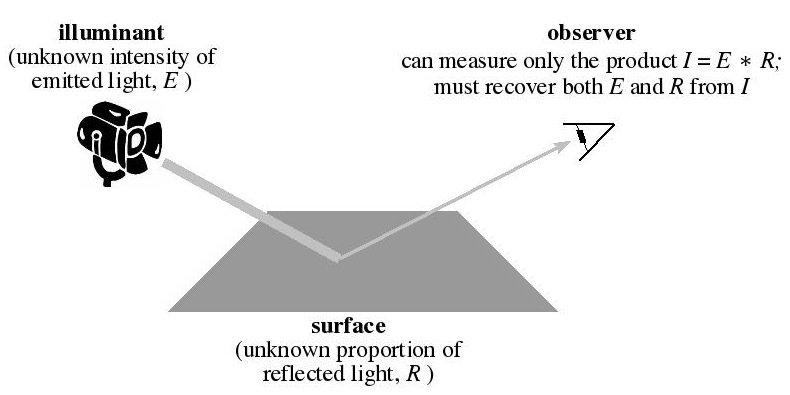
minds consist of computations: example #1 (perception)
the lightness perception problem
minds consist of computations: example #2 (thinking)

the supermarket queuing problem
minds consist of computations: example #3 (action)
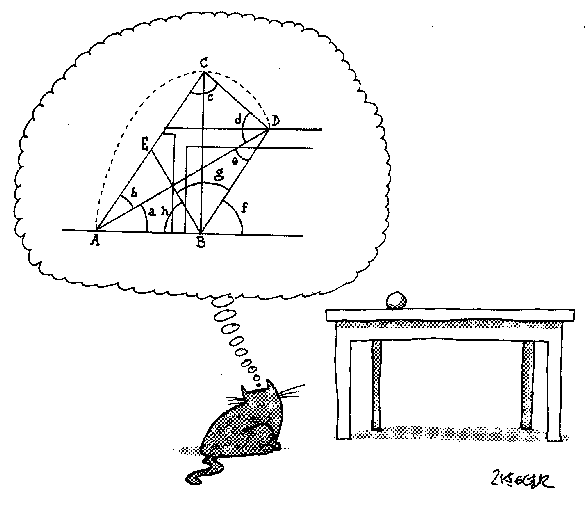
the motor control problem
minds consist of computations: example #3 (action)
minds consist of computations: example #3 (action)
the motor control problem
minds consist of computations: example #3 (action)
the motor control problem
minds, computations, and a bet
A standing bet that I offer:
For ANY aspect or faculty of the mind that you would care to
name, I can state and motivate a computational formulation.
For certain aspects and faculties of the mind, this can be
supported by an actual explicit and detailed explanation.
so, minds are sets of computations, but what are they for? behavior
Behavior is much more than
- associating stimuli with responses (S/R)
- mapping inputs to outputs
- generating actions by following rules
- choosing actions probabilistically
- chasing rewards
To truly understand behavior, one must study (animal) ethology and evolutionary ecology.
(Some) psychologists knew all along that understanding S/R is not
enough:
William James expressing the "reflex arc" idea (1911)
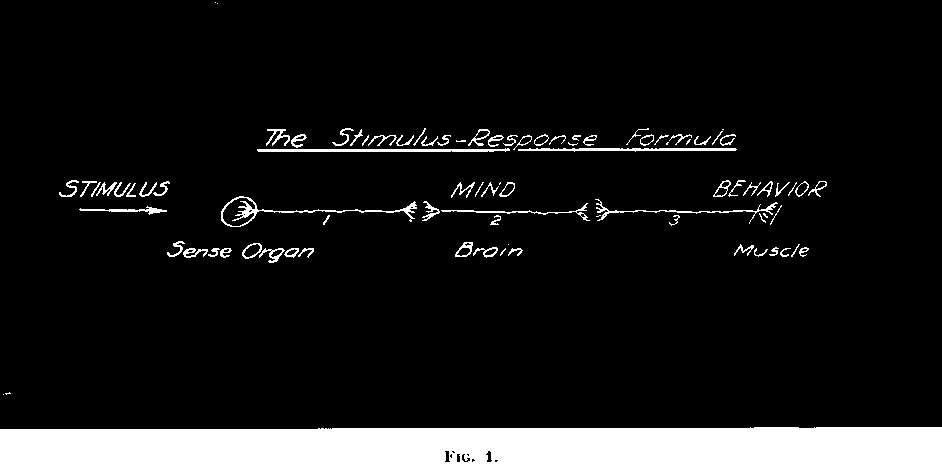
"The structural unit of the nervous system is in fact a triad, neither of
whose elements has any independent existence. The sensory impression exists
only for the sake of awaking the central process of reflection, and the
central process of reflection exists only for the sake of calling forth the
final act."
— William James (1911)
Essays
in Popular Philosophy
John Dewey on the "reflex arc" concept (1896)
"What we have is a circuit, not an arc or broken segment of a circle. [...]
The motor response determines the stimulus, just as truly as sensory
stimulus determines movement. Indeed, the movement is only for the
sake of determining the stimulus, of fixing what kind of a stimulus it
is, of interpreting it.
[...]
There is simply a continuously ordered sequence of acts, all adapted in
themselves and in the order of their sequence, to reach a certain
objective end, the reproduction of the species, the preservation of life,
locomotion to a certain place. The end has got thoroughly organized
into the means."
— John Dewey (1896)
The Reflex Arc Concept in Psychology
Psychological Review, 3, 357-370
Louis Thurstone on the stimulus/response fallacy (1923)
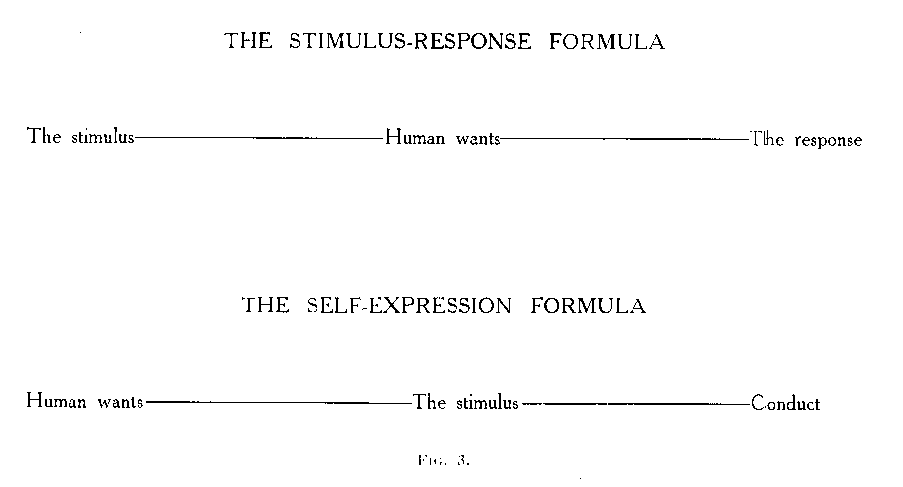
"My main thesis is that conduct originates in the organism itself and not
in the environment in the form of a stimulus. [...] All mental life may be
looked upon as incomplete behavior which is in the process of being
formed. [...] Perception is the discovery of the suitable stimulus which
is often anticipated imaginally. The appearance of the stimulus is one of
the last events in the expression of impulses in conduct. The stimulus is
not the starting point for behavior."
L. L. Thurstone (1923)
The Stimulus Response Fallacy in Psychology
Psychological Review, 30, 354-369
now: a refresher on computation
-
Dynamical systems
-
How to get complexity from simplicity
-
Turing Machines
a dynamical system: a piece of chalk + the earth, gravitating to each other
An object in free fall — part of a dynamical system* consisting of the
object and the earth, gravitating to each other — computes its
instantaneous velocity and location, given the elapsed time (the key
factor being the acceleration due to gravity).
 On the left: our experience of the world incorporates knowledge of
the dynamics of gravitation and other laws of physics.
On the left: our experience of the world incorporates knowledge of
the dynamics of gravitation and other laws of physics.
*A
dynamical system is a system that computes
the succession of its
states
over
time as prescribed by a function
of the current state (and possibly also past states and any
inputs).
a dynamical system: the Game of Life
Conway's game of Life is a (digital/discrete) dynamical system* —
Observe: it possesses a hierarchical structure.
Hierarchical structure is what makes complexity tractable.
complexity from simplicity: a check point
Most behavioral tasks DO NOT reduce to a simple function that neatly maps
inputs to outputs in one step.
Compare, for example
- playing chess or Go
with
- getting lunch
A complex problem is tractable insofar as it can be approached as a
hierarchy of simpler problems.
[NOTE that even then a closed-form ahead-of-time solution may not exist
and active "online" control may be required].
Complexity emerges out of simplicity.
hierarchical abstraction
"Scientific knowledge is organized in levels
[...] because nature is
organized in levels, and the pattern at each level is most clearly
discerned by abstracting from the detail of the levels far
below.

And nature is organized in levels because hierarchic structures —
systems of Chinese boxes — provide the most viable form for any system
of even moderate complexity."
[from The organization of complex systems by Herbert A. Simon (1973)]
computing the mind HIERARCHICALLY, level by level
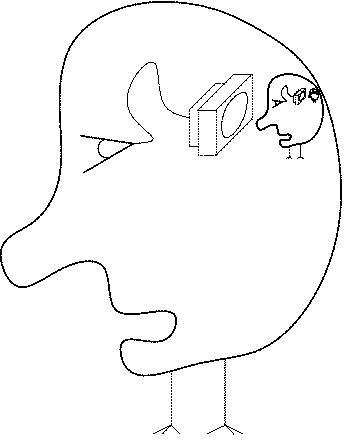
A computation that is reducible to a series of simple (= "stupid")
steps (perhaps hierarchically) is called effective.
[An effective explanation of the mind would need no miracles and no homunculus.]
effective computation
A procedure P for achieving some desired result is called
effective or "mechanical" if:
-
P is set out in terms of a finite number of exact instructions
(each instruction being expressed by means of a finite number of
symbols);
-
P will, if carried out without error, always produce the desired
result in a finite number of steps;
Because each step in an effective procedure — even in a very complex one
— is specified in simple terms, it can be executed by a machine whose
components are simple (stupid).
an epitome of "complexity out of simplicity": the Turing Machine
A key conceptual tool for understanding how complexity can emerge out of
simplicity is the Turing
Machine.
The Turing Machine is a very general formalism for describing an
effective mapping between input and output symbol streams.
TMs are a general formalism for effectively mapping inputs to outputs
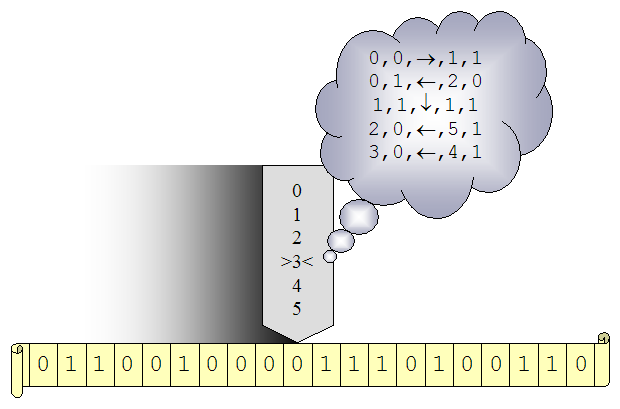
A Turing Machine consists of:
-
a table that specifies exactly how the machine's state changes...
-
...in response to symbols...
-
...that it reads (and writes)...
-
...on a memory tape.
the Turing Machine is a very powerful formalism
When I just said "very complex computations", I meant VERY COMPLEX
computations.
Amazingly, various apparent enhancements (such as adding more tapes or
more read/write heads) do not increase the power of the Turing Machine as originally defined.
Any general-purpose programmable computer has that same power.
how much should we care about Turing Machines?
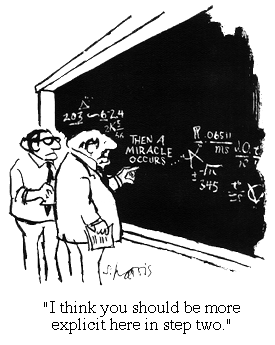
The TM is a proof of the principle that very complex computations can be
broken down into sequences of very simple ones.
To the extent that cognitive computations can be
expressed as sequences of
very simple elementary steps (such as
TM operations), cognition can be explained so that there is no "devil in
the details" and no recourse to miracles.
REMEMBER that behavior does not reduce to completing a computation
that maps an input to an output: DYNAMICAL ONGOING CONTROL is typically
needed.
Turing Machines and dynamical interactive computation
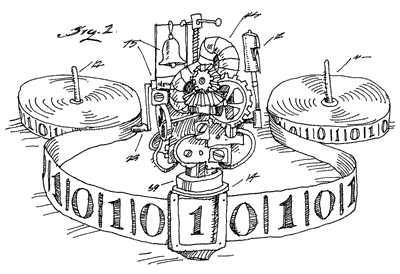
REMEMBER that behavior does not reduce to completing a computation
that maps an input to an output: DYNAMICAL ONGOING CONTROL is typically
needed.
[For some relevant developments, see
Turing's Ideas
and Models of Computation by E. Eberbach, D. Goldin, and
P. Wegner (2004).]
how much should we care about Turing Machines?
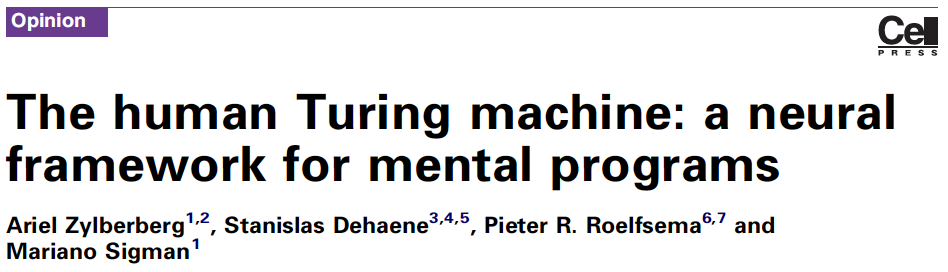
[The paper, published in Trends in Cognitive Sciences 15:293-300
(2011), can be found
here.]
[Consider the difference between native computation and emulation; more
about this in weeks 11-14.]
Turing Machines, brains, dynamics, and representation
A Turing Machine and the brain are both examples of
dynamical systems with a very rich capacity (1) for
stringing together elementary actions and (2) for building up
hierarchically structured complex actions out of simple ones.
However, brains are very much unlike Turing Machines (with regard to
what they compute natively, they are completely unlike TMs).
Functionally, brains, unlike TMs, particularly excel at ongoing
control of flexible behavior.
In this, and in everything else that brains do, they rely on the
critically important ability to REPRESENT cognitive
PROBLEM AND SOLUTION SPACES, including the dynamics of
(parts of (the rest of)) the world.
a dynamical system
(e.g., a brain, or a computer)
|
state 1
|
→
|
state 2
|
→
|
state 3
|
→
|
[...]
|
a dynamical system
(in the world at large)
|
state A
|
→
|
state B
|
→
|
state C
|
→
|
[...]
|
the basic explanatory concepts coming together
a dynamical system
(e.g., a brain, or a computer)
|
state 1
|
→
|
state 2
|
→
|
state 3
|
→
|
[...]
|
a dynamical system
(e.g., a brain, or a computer)
|
state I
|
→
|
state II
|
→
|
state III
|
→
|
[...]
|
a dynamical system
(in the world at large)
|
state A
|
→
|
state B
|
→
|
state C
|
→
|
[...]
|
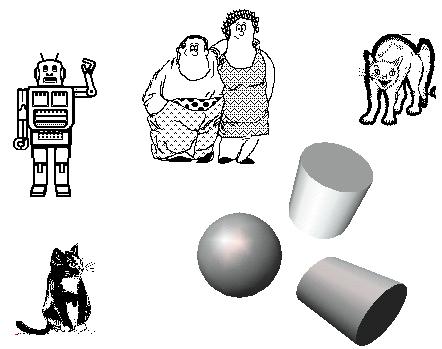
- computation is everywhere: every dynamical system computes
its next state;
- some computations represent each other because of their
matching causal organization (dynamics);
- recurring causal patterns of events in the world make forethought possible;
- minds evolve and function by making use of all of the above.
MINDS are bundles of dynamical, open-ended COMPUTATIONS over
REPRESENTATIONS of the world that brains carry out so as to
maximize the probability of their continuing existence, by
exercising FORETHOUGHT.
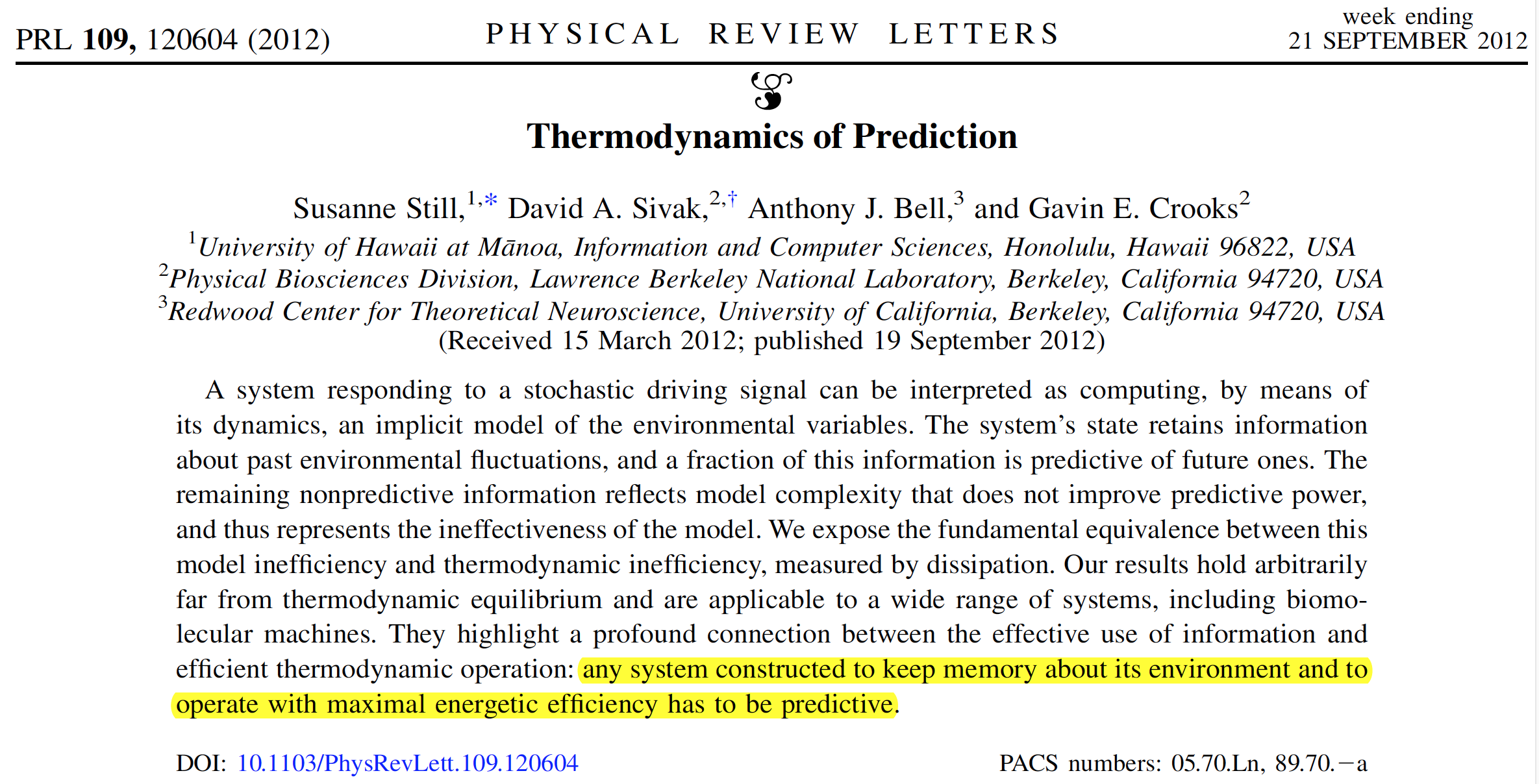
[EXTRA: concerning forethought and prediction]
what next? (methodology)

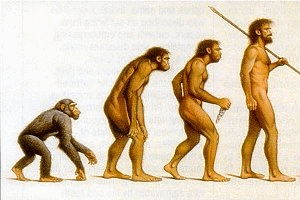
- food for thought — facts about cognition:
- perception
- memory
- decision making and action
- language
- reasoning
- problem solving
-
tools for thinking —
in what terms cognition can be understood, and
how it should be studied:
- computational analysis of the problems that arise in
cognition
- experiments motivated by, or shedding light on, computational theories
- a glimpse of the power and the limitations of neural computation
- insights into actual brain mechanisms of cognition
technical details: navigating the web site
The home page:
http://kybele.psych.cornell.edu/~edelman/comp-psych-20
To navigate the slides for a given lecture, use the keyboard
arrows (click the help button in the toolbar below for help).
To get a (relatively) printer-friendly version of a lecture
slide set, press "A".
administrative details: getting credit
To get credit:
- attend the lectures;
- read the assigned book chapters;
- submit the nightly write-ups;
- submit the final project.
readings: the book
-
For an informal introduction to the material covered in this course,
see my newer (and much lighter) book, The
Happiness of Pursuit (Basic Books, 2012).